Quick answer: The best garden hose for most yards is a 5/8-inch hose with a flexible, cold-tolerant cover and crush-resistant fittings, such as the Flexzilla Garden Hose. If you want a classic rubber hose that handles hot water, look at the Dramm ColorStorm Premium; if you fill pet bowls or kiddie pools, the Water Right 400 Series is built from drinking-water-safe polyurethane with lead-free fittings.
As an Amazon Associate, we earn from qualifying purchases. Some links on this page are affiliate links. We have not tested these products ourselves; this guide is based on manufacturer specs, listing details and buyer reviews as of November 2026. Prices and availability change, so check the listing before you buy. Many standard hoses are not meant for drinking water, so check the label before anyone drinks from one.
How to choose a garden hose: buying checklist
- Cover material. Rubber is heavy but tough and handles heat and sun well. Hybrid polymer hoses are lighter and stay flexible in the cold. Vinyl is cheap and light but tends to kink and crack sooner. Polyurethane hoses are thin and very light. Expandable hoses shrink when empty and are easy to store, but the thin inner tube is easier to puncture and they usually wear out faster.
- Diameter. 5/8 inch is the common all-purpose size. 3/4 inch moves more water for long runs and sprinklers. 1/2 inch and 7/16 inch hoses are lighter and fine for watering pots and beds, but deliver less flow.
- Length. Measure from the spigot to the farthest corner you water, then add a little slack. Longer hoses lose pressure and weigh more, so do not buy 100 feet if 50 will do. Two shorter hoses joined with a connector are easier to handle than one long one.
- Fittings. Machined brass (often nickel-plated) is durable and seals well. Anodized aluminum is lighter and resists crushing. Thin plastic fittings crack if stepped on or driven over. Look for “crush-resistant” in the specs.
- Burst and working pressure. Burst pressure is the point of failure; working pressure is what the hose is meant to handle day to day. Most homes run roughly 40 to 80 psi, so check that your hose’s working rating fits your house.
- Kink resistance. Look for reinforcement (multiple plies or a braided layer) and a cover that stays soft. A hose that kinks every few feet wastes more time than any other flaw.
- Drinking-water safe. If people or pets will drink from it, choose a hose labeled drinking-water safe, with lead-free fittings. Hoses without that label can contain lead or other additives, so do not drink from them.
- Temperature range. If you live where it freezes, check how cold the hose stays flexible. Some lightweight hoses stiffen well above freezing.
Best garden hose comparison
| Pick | Best for | Key features | What to check |
|---|---|---|---|
| Flexzilla Garden Hose | Most yards, cold climates | Hybrid polymer; 5/8 or 3/4 in; flexible -40°F to 140°F; aluminum fittings; 150 psi max working pressure | No burst rating listed; heavier than slim hoses |
| Dramm ColorStorm Premium Rubber | Heavy use, hot water | EPDM rubber; 5/8 in; nickel-plated brass fittings; 500 psi burst; hot water to 160°F | Rubber is heavy; drinking-water use not stated |
| Water Right 400 Series | Drinking water, light watering | 7/16 in polyurethane; lead-free brass fittings; about 3 lb per 50 ft; made in Oregon | Lower flow; 50 psi max working pressure |
| Zero-G Garden Hose | Lightweight, easy coiling | Woven fiber cover; aluminum couplings; up to 600 psi burst; lead-free inner core | Flexible only down to 35°F |
| Gilmour Flexogen Super Duty | Kink resistance on a budget | 8-layer build; crush-resistant couplings; 650 psi burst (retailer spec); lifetime warranty | Not rated for drinking water |
Our picks
Flexzilla Garden Hose
Flexzilla uses a hybrid polymer that the maker says stays flexible from -40°F to 140°F, which makes it a strong choice where winters are cold. It comes in 5/8-inch and 3/4-inch diameters, in lengths up to 100 feet, with crush-resistant anodized aluminum fittings and a limited lifetime warranty. Flexzilla says it is rated safe for drinking water and lies flat without much coil memory. Its maximum working pressure is 150 psi at 70°F.
Best for: everyday watering in most yards, especially in cold climates. Consider: no burst pressure is published, and the bright green color is not for everyone. A SwivelGrip version is available if you dislike twisting the hose to connect it.
Dramm ColorStorm Premium Rubber Hose
If you want a traditional rubber hose, the ColorStorm is a well-known option. It has a reinforced EPDM rubber cover, thick nickel-plated machined brass fittings, a 500 psi burst rating and a 130 psi working pressure. It handles hot water up to 160°F and stays flexible down to -25°F, according to the listing. It comes in several bright colors, which makes it easy to spot in the grass.
Best for: heavy daily use, washing with hot water, and people who like a sturdy rubber feel. Consider: rubber is heavier to drag and coil, and drinking-water safety is not stated, so do not use it for drinking water.
Water Right 400 Series Polyurethane Hose
This slim 7/16-inch hose is made in Oregon from polyurethane that Water Right says meets FDA and NSF standards for drinking water. The fittings are lead-free brass, and the maker says the hose is free of lead, BPA and phthalates. A 50-foot hose weighs about 3 pounds, so it is easy to carry to pots, raised beds and the greenhouse. Water Right lists a flow of about 4 gallons per minute at 40 psi and a 5-year warranty.
Best for: filling pet bowls, RV tanks and pools, and anyone who finds standard hoses too heavy. Consider: the narrow diameter delivers less water than a 5/8-inch hose, and the listed maximum working pressure is 50 psi, so check your home’s water pressure first.
Zero-G Garden Hose
Zero-G hoses use a woven fiber outer jacket over an inner core, which makes them much lighter than vinyl hoses of the same size. The maker lists crush-resistant aluminum couplings, a burst rating of up to 600 psi, and an inner core that is free of lead, BPA and phthalates. A heavier-duty 3/4-inch Pro version is also sold, and the brand lists warranties of up to 10 years depending on the model.
Best for: people who want a light hose that coils easily and fits in a small bin. Consider: Zero-G says the hose stays flexible down to 35°F, so it is a warm-season hose. Bring it inside before frost.
Gilmour Flexogen Super Duty Hose
Gilmour describes the Flexogen Super Duty as an 8-layer hose with foam layers and a reinforced core aimed at kink resistance, plus crush-resistant connections and a lifetime warranty. A major retailer lists the 5/8-inch Pro Flexogen at 650 psi burst pressure. It is a good fit if kinking is your main complaint with your current hose.
Best for: general yard work, car washing and lawns where you drag the hose around corners. Consider: the retailer listing says it is not safe for drinking water, and listings disagree on whether the couplings are brass or steel, so check the exact model before you buy.
Mistakes to avoid (plus a winter storage tip)
- Leaving the hose on the spigot in winter. Water trapped in the hose and faucet can freeze and crack the pipe. Since it is November, disconnect the hose now, close the outdoor valve if you have one, and open the spigot to drain.
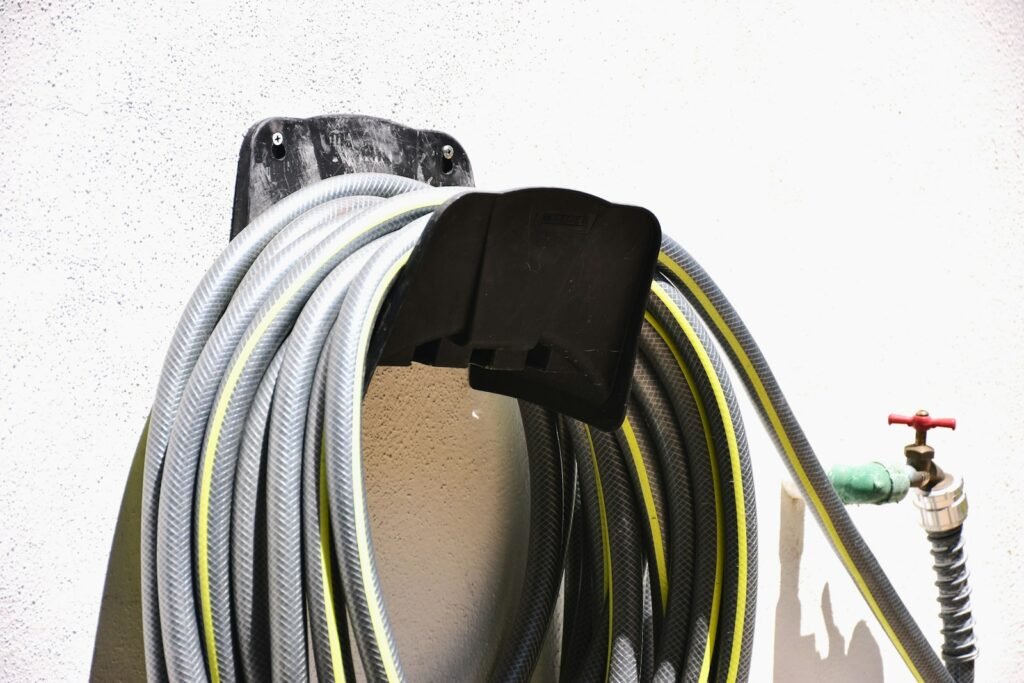
- Storing it full of water. Stretch the hose out on a slope or walk it back toward one end to push the water out. Coil it loosely, cap or connect the ends to keep bugs out, and store it in a garage, shed or basement off the floor.
- Buying far more length than you need. Extra length means more weight and less pressure at the nozzle.
- Drinking from a hose that is not labeled safe. Let water run for a bit even with a drinking-water hose, especially after it sits in the sun.
- Leaving it pressurized in the sun. Turn the water off at the spigot when you are done. Constant pressure and heat shorten the life of any hose, and they wear out expandable hoses especially fast.
- Forgetting the washer. Most drips at the faucet come from a missing or worn rubber washer, not a bad hose. Keep a few spares.
Frequently asked questions
What is the best garden hose material?
It depends on how you use it. Rubber is the most durable and handles hot water, but it is heavy. Hybrid polymer is a good middle ground that stays flexible in cold weather. Polyurethane and woven fiber hoses are the lightest. Vinyl costs less but usually kinks and cracks sooner.
Is 5/8 or 3/4 inch better for a garden hose?
For most homes, 5/8 inch is the right size. Choose 3/4 inch if you run long lengths, power large sprinklers, or need to fill things fast. The bigger hose carries more water but is also heavier.
Is it safe to drink water from a garden hose?
Only if the hose and fittings are labeled drinking-water safe or lead-free. Standard hoses may contain lead or other additives that can leach into water, especially when the hose is warm. Run the water for a few seconds before drinking from any hose.
Are expandable hoses worth it?
They are handy for small patios and balconies because they shrink for storage. The tradeoff is a thin inner tube that can burst or leak sooner than a standard hose. Turn off the water after each use and keep them away from sharp edges.
How should I store a garden hose for winter?
Disconnect it from the spigot before the first hard freeze, drain it fully, and coil it loosely. Store it indoors on a reel or hanger, out of direct sun. Remove any nozzle so water does not freeze inside it.
More guides
- Winter gardening tips
- End-of-season garden cleanup checklist
- Best gifts for gardeners
- Best greenhouse for winter
Sources
- Flexzilla Garden Hose product page
- Flexzilla Garden Hose specs bulletin
- Dramm ColorStorm Professional Rubber Hose
- Dramm ColorStorm Premium Rubber Garden Hose (Gempler’s)
- Water Right 400 Series product page
- Zero-G Hose official site
- Gilmour: The Flexogen Difference
- Gilmour Pro Flexogen 5/8 in. x 100 ft. (Ace Hardware)