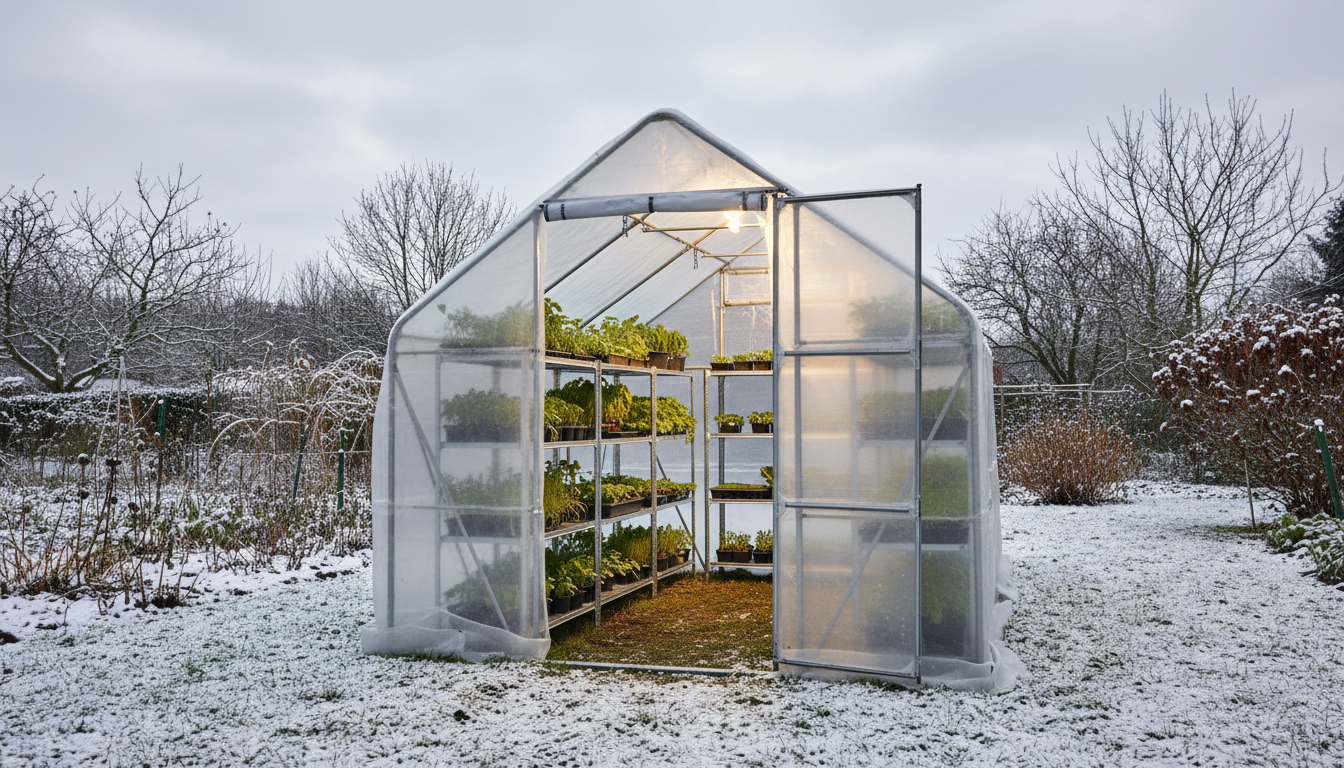
A greenhouse for winter lets you protect tender plants, keep harvesting hardy crops and start seeds early, even when it is freezing outside. A winter greenhouse does not have to be big or expensive. Small pop-up greenhouses and walk-in greenhouses with shelves are two popular options for home gardeners, and they are easy to set up. This guide compares both types, shares tips for winter greenhouse gardening, and helps you pick the right one.
As an Amazon Associate, we earn from qualifying purchases. Some links in this post are affiliate links, so we may earn a small commission at no extra cost to you. We have not tested these products; our notes are based on their Amazon listings. Prices and availability change, so check the listing before you buy.
Why use a greenhouse for winter?
A greenhouse traps sunlight and heat and blocks wind, frost and snow. That gives your plants a milder, more stable environment than the open garden. In winter it can help you:
- Protect potted plants and tender perennials from freezing.
- Keep growing cold-hardy greens such as kale, spinach and lettuce for longer.
- Start seedlings earlier in late winter.
- Overwinter herbs and keep them within easy reach of the kitchen.
- Shield plants from wind, ice and hungry animals.
What a winter greenhouse can and cannot do
It helps to be realistic. A plastic-covered greenhouse with no heater is a protective shelter, not a heated room. It will usually stay somewhat warmer than the air outside on sunny days, but it can still get very cold on freezing nights, so it is best suited to hardy crops, seedlings you can protect further, and plants that only need frost protection. In very cold climates, you may need extra insulation or a safe supplemental heat source. Also, strong wind and heavy snow can damage lightweight frames, so anchoring and snow removal matter, which we cover below.
Best greenhouses for winter: our picks
The options below are two types: small pop-up greenhouses that go up quickly, and walk-in greenhouses with a steel frame and shelves. Details come from each product’s Amazon listing, so check the page for current sizes, colors and reviews.
Pop-up greenhouses: small and quick to set up
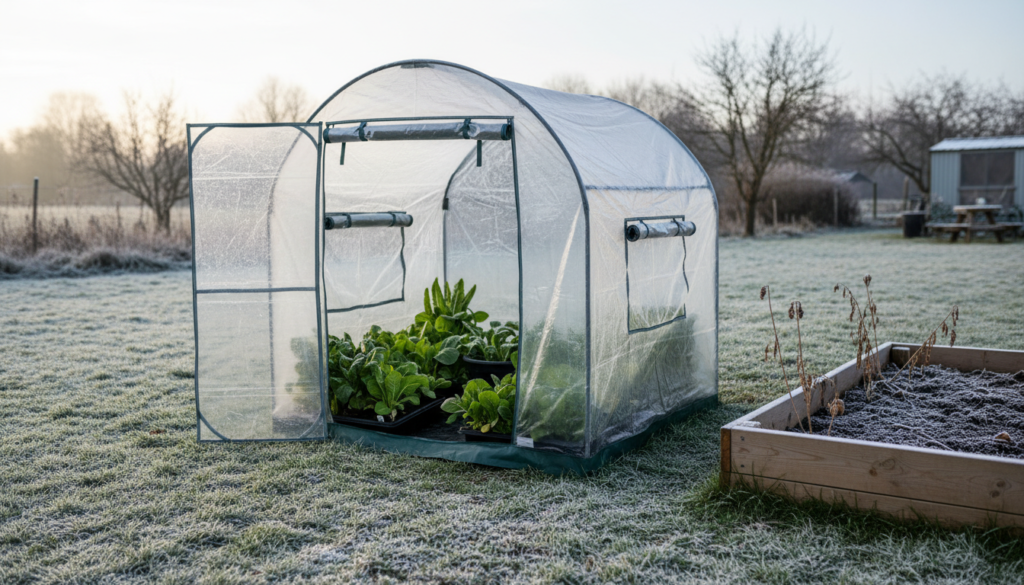
EAGLE PEAK 6×4 easy setup small pop-up greenhouse (clear/green). Listed for outdoor and indoor use and for winter protection, with a roll-up door and mesh windows, and described as a one-person setup. A pop-up style like this is a good fit if you have limited space, want to try a greenhouse for the first time, or need to move it as the season changes. The same product appears in two listings, so compare both for the options and price you prefer.
Walk-in greenhouses: more room and shelves
A walk-in greenhouse gives you space to stand inside, and many include shelving so you can fit more pots and trays in a small footprint.
SPECILITE 56 x 56 x 78 inch walk-in greenhouse. A steel frame with a thicker PE cover, a zipper roller door and a screen side window, described as a heavy-duty small plant house. The most square footage of the walk-in options here, and a good choice if you want room to move around inside.
56 x 30 x 76 portable walk-in greenhouse with shelves. A green PE cover over a steel frame, with three shelf levels on each side, a roll-up zipper door, and anchors and ropes included. Listed for seedlings and herbs, which makes it a handy choice for a winter herb and seedling setup.
56 x 30 x 76 mini walk-in greenhouse with 3-tier shelves. A portable plant house with a PE cover, roll-up door, steel frame, and stakes and ropes. Listed for seedlings, flowers and seasonal plant protection. It is the same size as the one above, so compare the two listings for details like cover thickness and reviews.
How to choose a greenhouse for winter
- Size and space. Measure the spot first. A small pop-up suits a patio or a corner of the yard, while a walk-in needs more room around it for access.
- Cover material. PE plastic is lightweight, affordable and lets light through, but it insulates less than glass or rigid panels. A thicker cover is generally more durable.
- Frame strength. A steel frame is sturdier against wind and weight than a very light frame. Check how the frame is built and how it is anchored.
- Doors and ventilation. A roll-up or zipper door and mesh or screen windows let you vent heat and humidity on sunny days, which prevents overheating and mold.
- Shelving. Tiered shelves let you grow more in a small footprint and keep pots off the cold ground.
- Anchoring. Look for included stakes, ropes or anchors, and plan to add weight or tie-downs in windy spots.
Winter greenhouse tips
Choose a sunny, sheltered spot
Place your greenhouse where it gets the most winter sun, usually a south-facing spot in the northern hemisphere, and where buildings or a fence block the worst of the wind. Make sure the ground is level and drains well.
Anchor it firmly
Lightweight greenhouses can lift or blow over in strong wind. Use every stake, anchor and rope that comes with it, and add weights or tie-downs if you can.
Vent on sunny days
Even in winter, a closed greenhouse can heat up fast in the sun and trap moisture. Open the door or windows for a short time on mild days to let humid air out, then close it before the temperature drops in the afternoon.
Clear heavy snow
Snow adds weight and can bend or collapse a light frame. Gently brush it off the roof and sides with a soft broom, and keep the area around the greenhouse clear.
Watch the temperature
A simple min-max thermometer shows you how cold it gets overnight, so you know when to add extra protection. Group plants together, keep pots off the floor, and cover tender plants with frost cloth on the coldest nights. Our guide to winter gardening tips covers more frost protection ideas.
Water carefully
Plants use less water in winter. Water in the morning, only when the soil is dry, and avoid leaving standing water that can freeze or encourage mold.
What to grow in a winter greenhouse
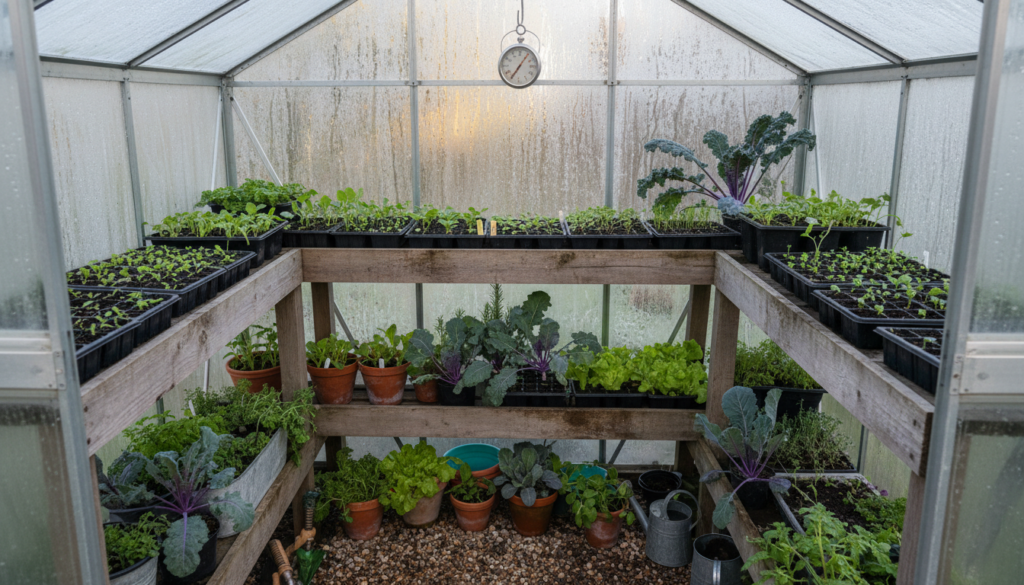
Cold-hardy crops do best in an unheated or lightly protected greenhouse. Good choices include kale, spinach, lettuce, mâche, radishes, and leafy herbs such as parsley and chives. Late winter is also a good time to start seeds for spring planting. You can also use the space to overwinter tender potted plants that would not survive outdoors.
How to keep a greenhouse warm in winter
- Insulate. Bubble wrap on the inside of the cover can reduce heat loss, as long as you keep light coming in and ventilation possible.
- Add thermal mass. Dark containers of water absorb heat in the day and release it slowly at night.
- Use extra layers. Frost cloth over plants gives a second layer of protection on very cold nights.
- Heat safely if you need to. If you add a heater, choose one made for greenhouse use, follow the maker’s instructions, and keep ventilation in mind.
Frequently asked questions about greenhouses for winter
Do greenhouses stay warm in winter?
They stay warmer than the open air on sunny days, but an unheated plastic greenhouse still gets cold on freezing nights. Insulation and extra covers help, and very cold climates may need supplemental heat.
Can I use a plastic or pop-up greenhouse in winter?
Yes, many people do for frost protection and cold-hardy crops. Anchor it well, remove snow, and avoid expecting it to perform like a heated glass greenhouse.
What can I grow in a greenhouse in winter?
Hardy greens like kale, spinach and lettuce, herbs, and seedlings for spring. You can also shelter tender potted plants.
Do I need to heat a winter greenhouse?
Not always. Hardy crops can do well unheated with some protection. Tender plants and very cold areas may need a heat source.
How do I stop my greenhouse blowing away?
Use all included stakes and anchors, tie it down to something secure, add weight to the base, and choose a sheltered spot.
Get your garden ready first
Before the cold arrives, put your beds to rest with our end of season garden cleanup checklist, then set up your greenhouse for the cold months ahead.