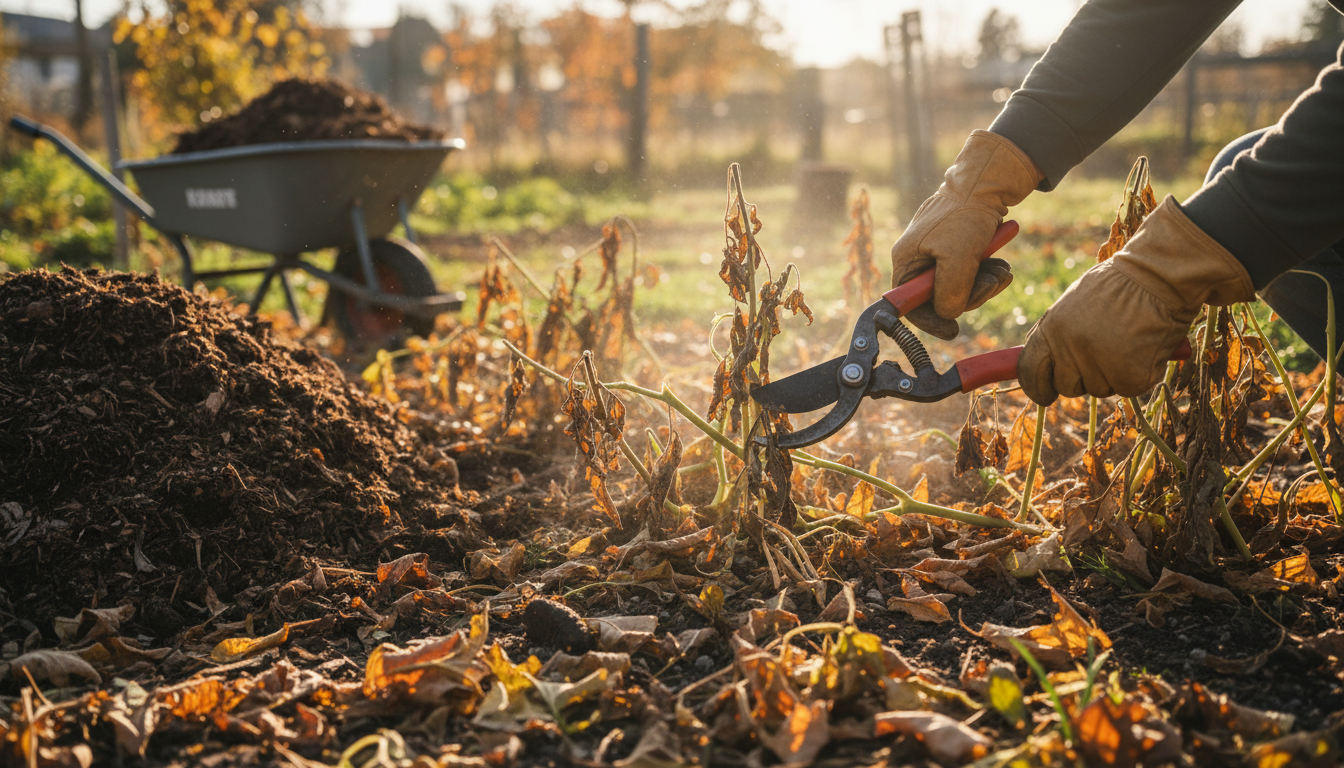
An end of season garden cleanup is one of the best things you can do for next year’s garden. A few hours of fall garden cleanup cuts down on pests and disease, protects your soil, and means a much easier start when spring arrives. This checklist walks you through how to prepare your garden for winter, step by step, in the order that makes the most sense.
As an Amazon Associate, we earn from qualifying purchases. Some links in this post are affiliate links, so we may earn a small commission at no extra cost to you. We have not tested these products; our notes are based on their Amazon listings. Prices and availability change, so check the listing before you buy.
When to start your fall garden cleanup
There is no single date that works everywhere. A good rule is to begin once most plants have stopped producing or have been blackened by frost, and to finish before the ground freezes hard. Check your local average first frost date, and spread the work over a few weekends rather than doing it all at once.
End of season garden cleanup checklist
1. Clear out spent annuals and vegetable plants
Pull finished annuals, tomato vines, squash plants and other spent crops. Healthy plant material can go in the compost pile. Throw diseased or pest-infested plants in the trash instead, since many problems survive winter in leftover debris and come back in spring.
2. Weed before the seeds spread
Weeding now means fewer weeds next year. Remove any weeds that have gone to seed and keep those out of the compost, because the seeds can survive and spread.
3. Cut back perennials, but not all of them
Trim back perennials that are brown, flopped over or showing signs of disease. Consider leaving some seed heads and hollow stems standing. They feed birds, give shelter to beneficial insects and add winter interest, and you can tidy them in early spring.
4. Rake leaves and make leaf mold
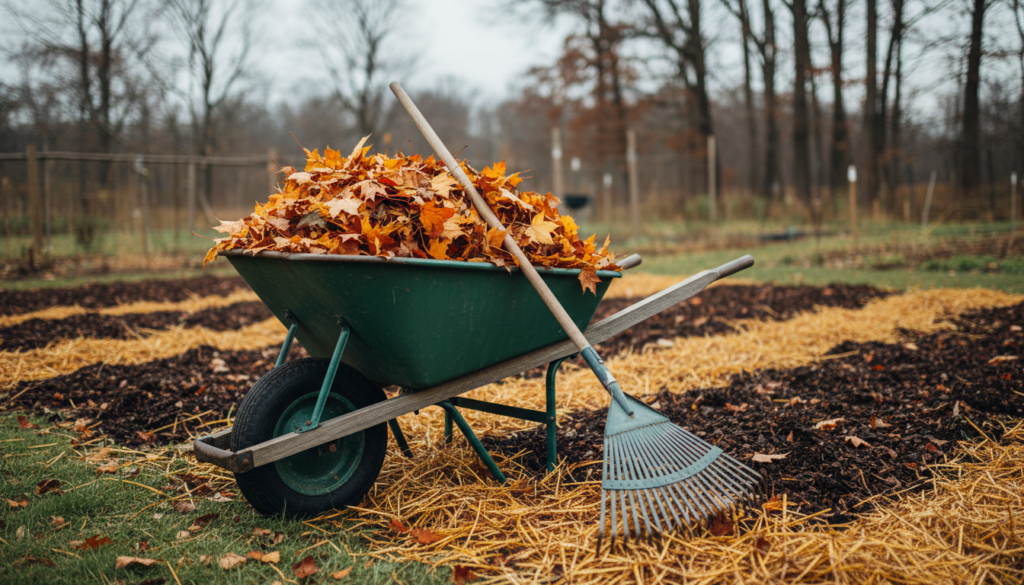
A thick mat of whole leaves can smother lawns and crowns of low plants, so rake or mow them up. Shredded leaves make a free mulch for garden beds, and a pile left to break down for a year or two turns into leaf mold, a great soil conditioner.
5. Feed and protect your soil
Bare soil washes away and loses nutrients over winter. Spread a layer of compost over your beds, then cover with mulch such as shredded leaves or straw. In vegetable beds, you can sow a cover crop like winter rye or clover to hold the soil and add organic matter when it is turned under in spring. A fall soil test also lets you correct nutrient or pH problems ahead of time.
6. Plant fall bulbs and garlic
Fall is the time to plant spring-flowering bulbs like tulips, daffodils and crocuses, as well as garlic. Plant them once the soil has cooled, giving them time to root before the ground freezes. If you are planning other crops for the cooler months, see our guide on what to plant in September.
Bulb planter tool, 5 inch depth. A hand planter with automatic soil release, listed for tulips, daffodils, dahlias, lilies and onions. It saves digging each hole by hand.
100 Narcissus Daffodil Mix flower bulb box. A box of white and yellow daffodil bulbs with an easy carry handle and planting instructions included, for gardens, containers and flowerbeds.
Taylor soil thermometer. An analog dial with a 4-inch stainless steel stem that reads from 20 to 180 degrees F, handy for checking how far the soil has cooled before you plant.
7. Divide overcrowded perennials
Many perennials, such as hostas and daylilies, can be dug up and split in early fall to give them more room and to get free plants. Do it early enough that the new divisions can settle in before the ground freezes, and water them well.
8. Lift tender bulbs and bring in frost-tender plants
Tender plants like dahlias, cannas and gladiolus will not survive freezing ground in cold climates. After the first frost, dig up the bulbs or tubers, let them dry, and store them in a cool, dry place in breathable material. Bring potted herbs and tender container plants indoors before the first frost.
9. Clean, sharpen and store your garden tools
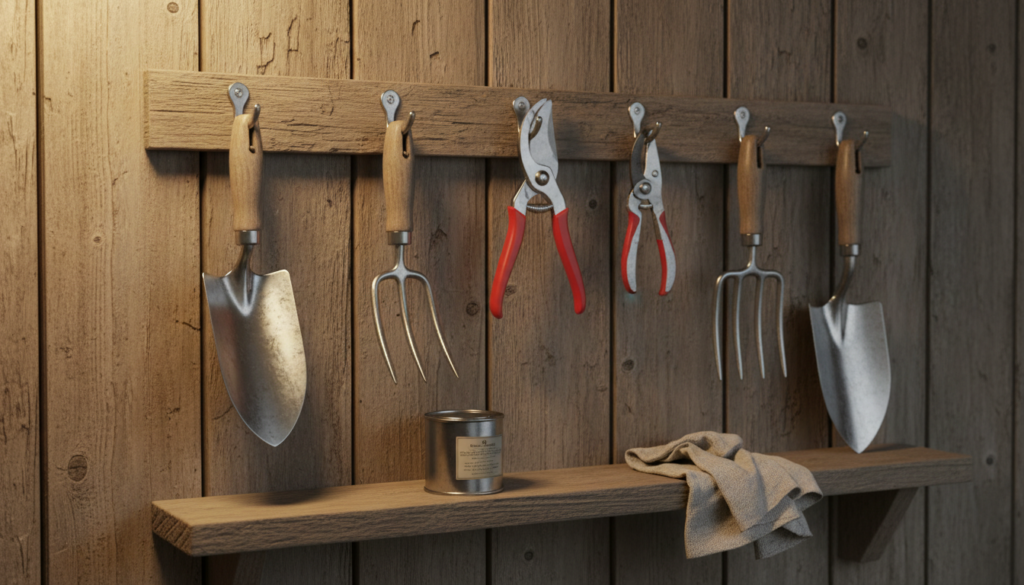
Wipe soil off shovels, trowels and pruners, sharpen blades, and wipe metal parts with a light coat of oil to prevent rust. Tools that go into storage in good shape are ready to use in spring.
10. Drain hoses, irrigation and containers
Water left in hoses, irrigation lines and outdoor taps can freeze and crack them. Drain and coil hoses, shut off outdoor water where needed, and empty pots and planters, especially ceramic and terracotta ones that can split in freezing weather.
Gear that makes fall garden cleanup easier
You do not need much to get the job done, but the right hand tools and a good pair of gloves make cleanup faster and more comfortable. If your tools are worn out or missing, these sets are worth a look.
Garden hand tool sets
Fiskars 3-piece garden hand tool set. A trowel, transplanter and cultivator, a simple set for planting, digging and loosening soil.
9-piece stainless steel gardening tool set with storage tote. Listed as heavy duty and rust-proof, with a fashion storage tote, and marketed as a gift for gardeners.
JUMPHIGH 10-piece garden tool set. A bigger kit that lists a hand trowel, rake, weeder and pruner, plus a tote bag, apron, gloves and kneeling pad, so it covers most of the basics in one box.
Gardening gloves
Long thorn-proof cowhide leather gardening gloves. Listed for pruning roses, cactus and blackberry, with long cuffs, which makes them useful when you are cutting back thorny shrubs and canes.
What not to do in the fall garden
- Do not prune most shrubs hard. Heavy pruning in fall can trigger new growth that frost then damages, and it can remove next year’s flower buds on spring-blooming shrubs. Stick to removing dead or damaged branches.
- Do not fertilize heavily. Late feeding encourages tender growth that will not survive the cold.
- Do not compost diseased plants. Home compost piles often do not get hot enough to kill disease organisms.
- Do not tidy everything. Leaving some habitat for wildlife helps the garden’s ecosystem.
Frequently asked questions about fall garden cleanup
When should I do my end of season garden cleanup?
Start when plants have finished producing or been killed by frost, and finish before the ground freezes. Exact timing depends on your climate and local frost dates.
Should I cut back perennials in the fall?
It depends on the plant. Remove diseased or collapsed growth now, and consider leaving sturdy stems and seed heads until spring for wildlife and winter interest.
Should I leave leaves on my garden beds?
A thin layer of shredded leaves is a good free mulch. A deep mat of whole leaves can smother plants and hold too much moisture, so rake it off or shred it first.
What should I put on my garden soil for winter?
Compost topped with mulch is a simple, effective choice. In vegetable beds, a cover crop is another way to protect the soil and improve it for spring.
Keep your garden going through the cold months
Once your beds are put to rest, you can still grow and plan through the cold season. Read our guide to winter gardening tips for ways to protect plants and keep harvesting. If you want a more relaxed approach to planting next year, have a look at what chaos gardening is.