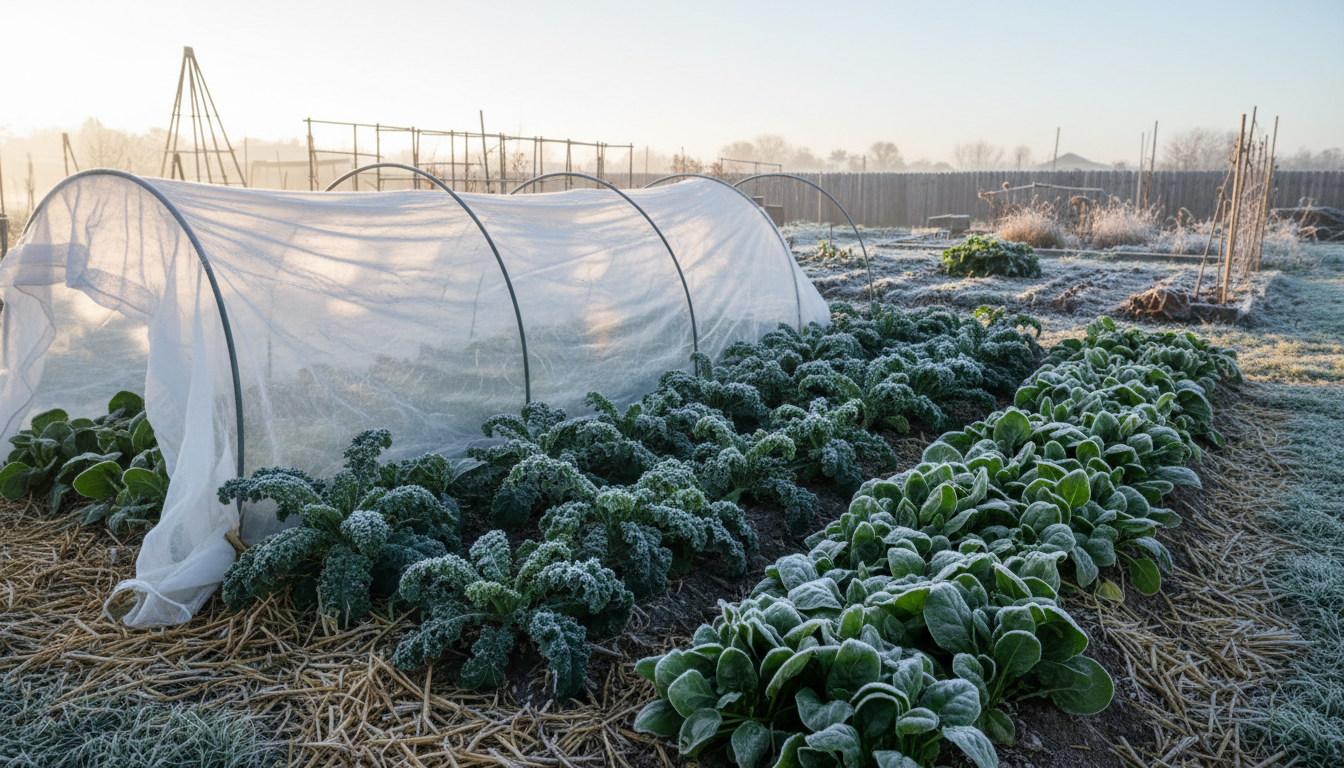
You do not have to put your garden away for the whole cold season. These winter gardening tips cover what to grow in winter, how to protect plants from frost, and how to keep things going indoors, whether you are a beginner or just want to extend your harvest. What is possible depends on your climate, so start by checking your local hardiness zone and average winter lows.
As an Amazon Associate, we earn from qualifying purchases. Some links in this post are affiliate links, so we may earn a small commission at no extra cost to you. We have not tested these products; our notes are based on their Amazon listings. Prices and availability change, so check the listing before you buy.
Can you garden in winter?
Yes. In mild climates you can keep growing hardy vegetables in the ground. In colder places, simple season extenders such as row covers, cold frames and low tunnels let you keep harvesting for longer, and indoor growing fills the gap when the ground is frozen. Even in the deepest cold, winter is a useful time for planning, seed ordering and tool care.
What to grow in winter
Choose cold-hardy crops that tolerate frost, and grow them with some protection if your winters are harsh. Good winter vegetables include:
- Kale and collards: tough leafy greens that handle frost, and often taste sweeter after cold weather.
- Spinach and mâche (corn salad): fast cool-season greens that do well under cover.
- Carrots, beets and parsnips: root crops that can stay in the ground under a thick mulch and be harvested as needed.
- Leeks and onions: hardy alliums that stand up well to cold.
- Garlic: planted in fall, it overwinters in the ground and is harvested the following summer.
- Cabbage and Brussels sprouts: sturdy brassicas that tolerate light frosts.
Hardy flowers and shrubs also give winter color. Think of evergreens, winter-blooming pansies and ornamental grasses with seed heads that look good in frost.
How to protect plants from frost and cold
Use row covers and frost cloth
Lightweight fabric row covers trap a little warmth and block wind. Drape them over hoops or directly over hardy plants in the evening when frost is forecast, and remove or open them on mild days. Frost cloth or an old sheet works for a quick overnight cover. Avoid plastic touching the leaves, since it can transfer cold.
Reusable floating row cover and frost cloth, 6.5 ft x 32.8 ft. A 0.88 oz/yd² plant blanket listed for freeze protection of outdoor garden plants, long enough to cover a bed or a row.
Winter drawstring plant covers, 4 pack, 23.6 x 31.5 inch. Warm cover bags for fruit trees and potted plants, listed as protection from freezing and from animals eating the plants. Handy for individual containers and small shrubs.
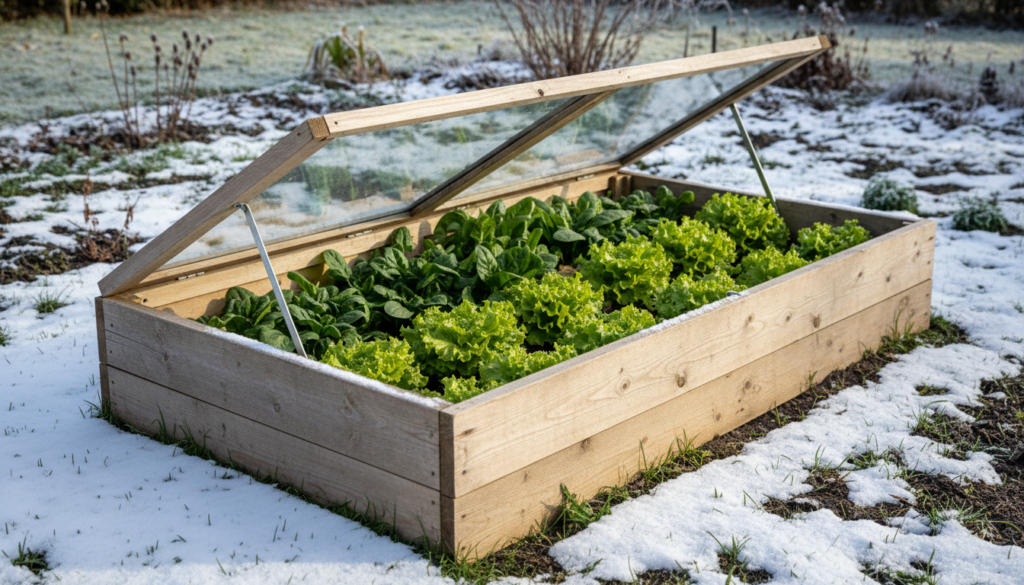
Try a cold frame or low tunnel
A cold frame is basically a bottomless box with a clear lid that acts as a mini greenhouse. It lets you grow greens through much of winter. Open the lid on sunny days so the plants do not overheat, and close it again at night.
Mulch to insulate roots
Once the soil has cooled, spread several inches of straw, shredded leaves or wood chips over beds and around perennials. Mulch evens out soil temperature and reduces the damage caused by repeated freezing and thawing. Keep it a little back from plant stems to avoid rot.
Urban Worm soil thermometer, 5-inch stainless steel stem. A quick way to check how warm or cold your soil actually is, listed for gardening and worm bins.
Look after potted plants
Containers freeze faster than the ground. Move them close to a sheltered wall, group them together, lift them off the soil with pot feet, or wrap them in burlap or bubble wrap. Bring tender plants into a bright, cool indoor space.
Water wisely
Plants need less water in winter, but they should not dry out completely, especially evergreens and new plantings. Water on a mild morning rather than right before a hard freeze, and avoid waterlogged soil.
Winter gardening indoors
When it is too cold outside, you can still garden at home. Grow herbs such as parsley, chives and mint on a sunny windowsill, or use a grow light for more reliable results. Microgreens and sprouts are quick, easy winter crops. For houseplants, water less often, keep them away from cold drafts and heaters, and wipe dust off leaves so they catch more light.
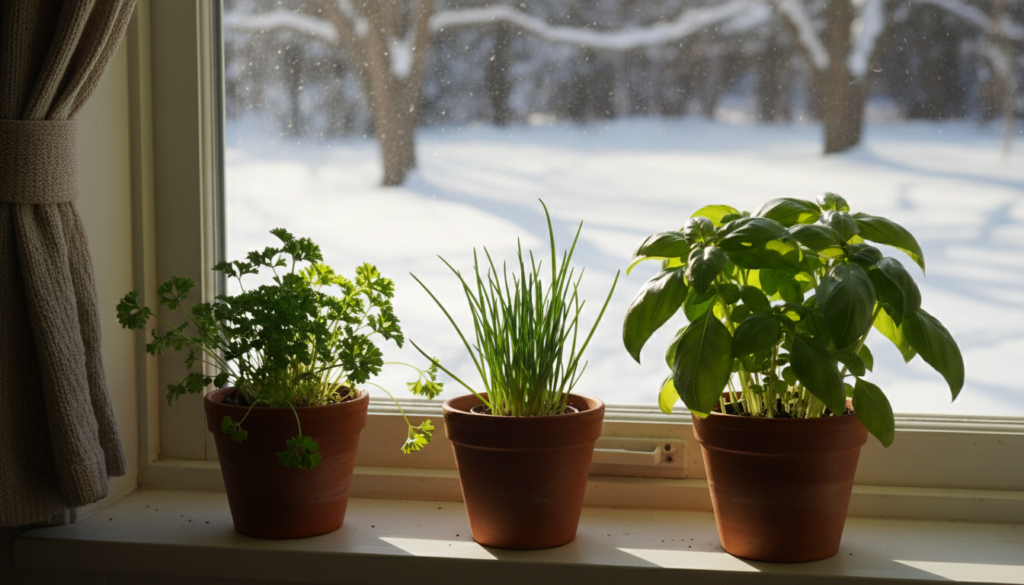
Click & Grow indoor herb garden kit with grow light. A smart garden for a kitchen or windowsill, listed with 3 basil pods included. It is a low-effort way to grow fresh herbs while the garden outside is dormant.
Seed starting and grow lights
Late winter is a good time to start slow-growing seeds indoors so seedlings are ready for spring. A tray with a humidity dome and a light keeps things simple. These kits all include a grow light:
Seed starter tray with grow light, 2 pack, 80 cells. Vented humidity dome, drainage holes and adjustable brightness.
60-cell self-watering seed starter tray with grow light. Comes with a 4.07 inch humidity dome, a good size for starting a modest number of seeds.
120-cell self-watering seed starter tray with grow light. The same style with more cells, for gardeners starting a lot of seedlings at once.
SOLIGT 60-cell seed starter kit with grow light and heat mat. Adds a heat mat to the grow light, with a taller 4.3 inch humidity dome and flexible light positioning.
If you are setting up a bigger indoor garden, a full-size light is another option.
VIVOSUN LumaLight 400W LED grow light. A full spectrum, dimmable light listed for fitting 4×4 and 5×5 grow tents. It is a serious light for a dedicated grow setup, so it is more than you need for a windowsill or a small seed tray.
Winter garden jobs to do
- Plan next year’s beds and rotate crops.
- Order seeds early and check what is left from last season.
- Gently brush heavy snow off evergreen branches to prevent breakage.
- Keep bird feeders and a source of unfrozen water filled.
- Prune dormant trees and shrubs in late winter, before new growth starts.
- Start slow-growing seeds indoors toward the end of winter.
Bird bath heater for winter. A thermostatically controlled deicer made of heavy duty cast aluminum, listed for outdoor bird baths. It helps keep a source of water available for birds when everything else is frozen.
Winter gardening mistakes to avoid
- Walking on frozen or soggy beds, which compacts the soil.
- Using de-icing salt near planting areas, since it can damage plants and soil.
- Fertilizing dormant plants, which wastes product and can encourage tender growth.
- Leaving covers on during warm, sunny days, which can overheat and stress plants.
Frequently asked questions about winter gardening
What vegetables can you grow in winter?
Cold-hardy vegetables such as kale, spinach, carrots, leeks, cabbage and garlic are the most reliable. In colder climates, grow them under row covers, a cold frame or a low tunnel.
How do I protect my plants from frost?
Cover tender plants with frost cloth or a sheet before sunset, mulch the soil around roots, move containers to a sheltered spot, and remove covers when the temperature rises.
Do I need to water plants in winter?
Yes, but much less. Check evergreens, containers and new plantings, and water them on mild days if the soil is dry.
What is the best winter gardening for beginners?
Start with a few hardy greens under a row cover, plant garlic in fall, and grow herbs on a windowsill. These need little equipment and are forgiving.
Start with a good fall cleanup
A strong winter garden starts in fall. Follow our end of season garden cleanup checklist to put your beds to rest, protect your soil and get your tools ready.