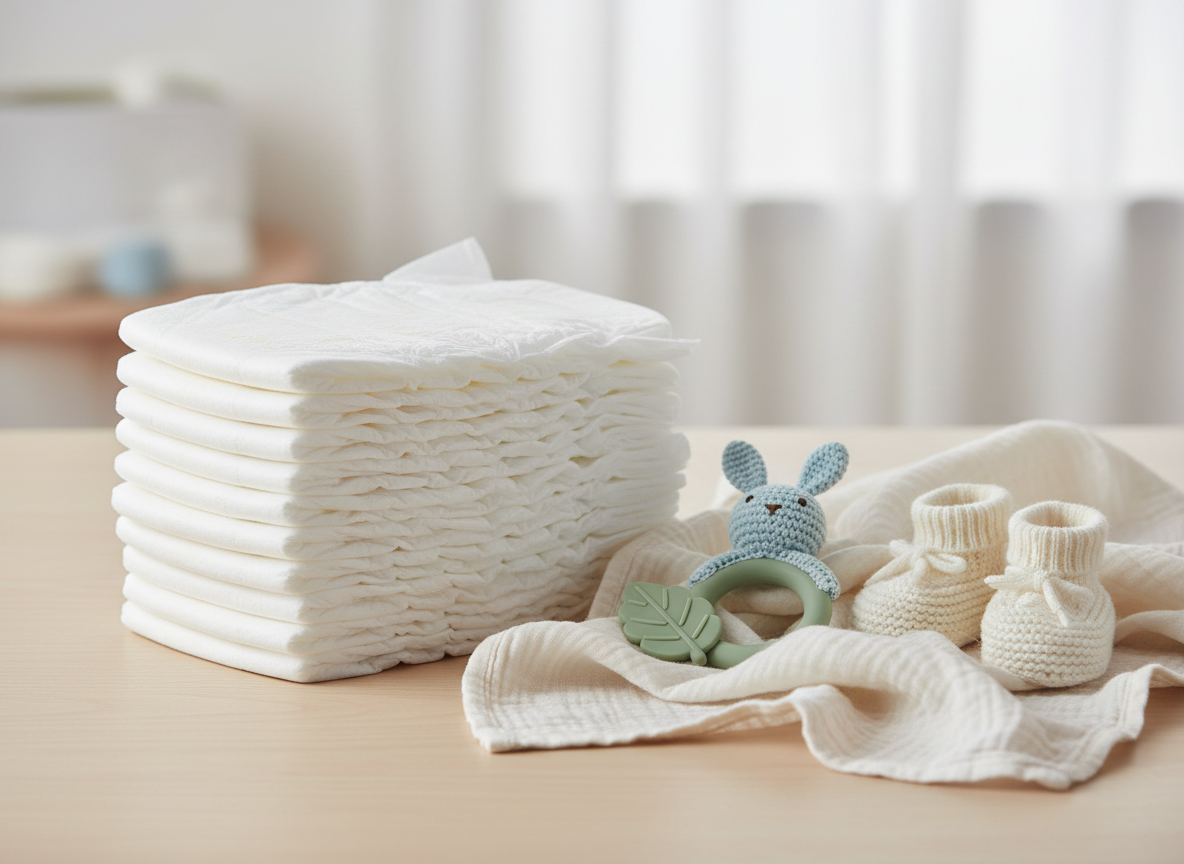
Diapers are one of the biggest ongoing purchases for new parents, and the best choice depends on your baby’s size, skin and your budget. With so many brands, sizes and types, it helps to know what actually matters. This guide covers diaper sizing, fit, absorbency, skin sensitivity and cost, so you can choose with confidence.
As an Amazon Associate, we earn from qualifying purchases. Some links on this page are affiliate links, so we may earn a commission at no extra cost to you. We have not tested these products; this guide is general information, not medical advice. Check each listing for current sizes and details, and ask your pediatrician about skin concerns.
Key takeaways
- Use the weight range on the package as a starting point, then check the fit at the waist and legs.
- Frequent leaks, red marks or tabs that barely reach can mean it is time to size up.
- For sensitive skin, look for fragrance-free or hypoallergenic options and ask your pediatrician about persistent rashes.
- Buy a small pack of a new brand before stocking up, and compare cost per diaper.
Diaper sizes and fit
Diaper sizes run from newborn through larger toddler sizes and are based on weight ranges printed on the package. Brands differ slightly, so use the weight guide as a starting point and watch the fit.
- Waist: the diaper should be snug but not tight, with the tabs fastening comfortably near the center.
- Legs: the leg cuffs should sit snugly without leaving deep red marks.
- Rise: a diaper that sits too low or too high can leak.
Signs it may be time to size up include frequent leaks, red marks, tabs that barely reach, or a baby at the top of the weight range.
What to look for in a diaper
Absorbency
Overnight diapers or higher-absorbency types help babies sleep longer without leaks. A wetness indicator, often a line that changes color, can help new parents judge when to change.
Sensitive skin
If your baby has redness or frequent rashes, look for fragrance-free, hypoallergenic or dermatologist-tested options. Change diapers promptly, clean gently and ask your pediatrician about persistent rashes.
Newborn features
Newborn sizes often include a cut-out for the umbilical cord stump. Newborns outgrow this size quickly, so avoid buying large quantities until you know what fits.
Leak protection
Stretchy sides, leg gathers and a back barrier help contain messes, especially for active babies and runny stools.
Material and comfort
Soft liners, a flexible waistband and a breathable outer layer can make diapers more comfortable. Some brands market plant-based or chlorine-free materials; check the listing for what is actually included.
Disposable, cloth or a mix?
- Disposable: convenient, widely available and good for travel and daycare.
- Cloth: higher upfront cost and extra laundry, but reusable and sometimes cheaper over time.
- Hybrid: reusable covers with disposable inserts offer a middle path.
Many families use a mix depending on the situation.
How to save on diapers
- Compare cost per diaper, not per pack.
- Buy a small pack of a new brand before stocking up.
- Do not over-buy newborn or small sizes.
- Consider bulk packs once you find a brand that fits well.
- Pair diapers with a good supply of wipes and diaper cream.
Diaper changing basics
- Gather diaper, wipes and cream before you start.
- Place the baby on a safe, flat surface, keeping a hand on them.
- Clean front to back, and let skin dry briefly.
- Fasten the new diaper snugly, with the tabs even.
- Wash your hands afterward.
Frequently asked questions
How many diapers does a newborn use?
Newborns often use many each day, so plan for frequent changes in the first weeks.
What causes diaper leaks?
Usually the wrong size, a loose fit, or a diaper that needs changing.
Are fragrance-free diapers better?
They can be gentler for sensitive skin.
When should I move to the next diaper size?
When the diaper no longer fits comfortably or leaks become frequent.
Are cloth diapers cheaper than disposables?
They can be over time, but they cost more upfront and add laundry. Many families use a mix.
Related baby guides
- How to choose a baby crib: safety checklist and features
- How to choose a bassinet: safety, features and space
- How to choose a bed rail for toddlers
See more family picks in our household guides.