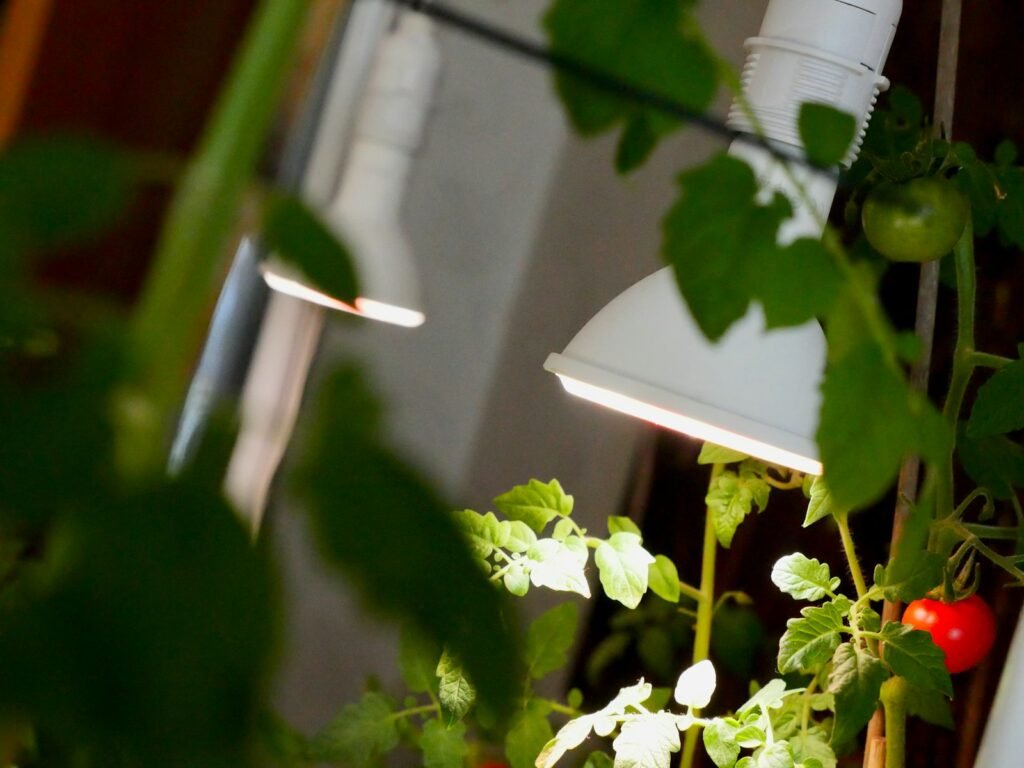
Quick answer: The best indoor grow light is the one that matches what you grow. For a seed-starting shelf, linkable T5 LED strips like Barrina’s are hard to beat. For a few herbs or tomatoes on a rack, a dimmable panel such as the Spider Farmer SF1000 gives more light per square foot, and for one houseplant in the living room, a GE Grow BR30 bulb or a Soltech Aspect pendant blends in with your decor.
As an Amazon Associate, we earn from qualifying purchases. Some links on this page are affiliate links. We have not tested these products ourselves; this guide is based on manufacturer specs, listing details and buyer reviews as of November 2026. Prices and availability change, so check the listing before you buy. Grow lights are electrical devices: keep plugs and cords away from water and follow the manual.
How to choose the best indoor grow light
Grow lights are not all the same. A bulb that keeps a pothos happy will not ripen peppers, and a big panel is overkill for a single fern. Work through this checklist before you buy.
- What you are growing. Low-light houseplants need far less light than seedlings, herbs or fruiting plants like tomatoes. Seedlings need strong light close to the leaves to avoid getting tall and floppy.
- Size of the area. Measure the shelf, table or tent. Panels and strips list a coverage area (for example 2 x 2 feet). A single bulb lights roughly one plant.
- Light output, not just watts. Watts tell you how much power the light uses. PPF (in µmol/s) tells you how much plant-usable light it makes. When a brand lists PPF, compare that.
- Form factor. Bulbs fit lamps you already own. Strips mount under shelves. Panels hang above racks or tents. Pendants hang from the ceiling and look like normal lighting.
- Color of the light. White, full-spectrum light is easier to live with in a room. Pink or purple light works for plants but looks odd in a living space.
- Dimmer and timer. A dimmer lets you start seedlings gently. A timer keeps a steady day length, which plants like. If the light has no timer, add a plug-in outlet timer.
- Height and mounting. Check the maker’s recommended hanging distance and make sure you can raise the light as plants grow.
Indoor grow lights compared
| Pick | Best for | Key features | What to check |
|---|---|---|---|
| Spider Farmer SF1000 | Herbs, veggies and seedlings on a rack or in a small tent | 100W LED panel, dimmable, 2 x 2 ft core coverage | Needs a way to hang it; bright for a living room |
| Barrina T5 grow light strips (2 ft) | Seed-starting shelves | Linkable strips, switch on each strip, clips and tape included | Pinkish or white version; timer only on some packs |
| GE Grow BR30 bulb (Seeds and Greens) | One houseplant in an existing lamp | 9W, 16 PPF, standard E26 base, white-looking light | Not dimmable; covers a small area |
| Soltech Aspect Gen 2 | Statement plants in living spaces | Pendant style, warm 3000K full spectrum, built-in dimmer | Ceiling or wall hook needed, or buy the stand set |
| AeroGarden Harvest Lite | Countertop herbs for beginners | 6-pod hydroponic garden with 15W LED | Seed pods and plant food sold separately |
The best indoor grow lights by need
1. Spider Farmer SF1000: best LED panel for herbs and veggies
The SF1000 is a 100-watt full-spectrum LED board that Spider Farmer rates for a 2 x 2 foot growing area. It has a dimmer knob, so you can run it low for seedlings and turn it up for leafy greens, peppers or dwarf tomatoes. Retail listings describe it as fanless (so it is quiet) and covered by a 5-year warranty. It is a working light, not a decor piece, so it suits a wire rack, a closet or a small grow tent.
Best for: serious herb and vegetable growing indoors. Consider: you need hooks or a frame to hang it at the right height.
2. Barrina T5 grow light strips: best for seed starting
Barrina’s 2-foot T5 LED strips are a popular way to light a shelving unit full of seed trays. The strips link together (the listing says up to 16 in a row), each one has its own on/off switch, and the kit comes with clips, tape and cable ties for mounting under a shelf. Packs come in pinkish full-spectrum or 5000K white versions, and some packs add a built-in 4/9/14-hour timer. Because strips sit close to the trays, they are good at keeping seedlings short and sturdy.
Best for: starting vegetables and flowers in late winter. Consider: check which pack you are buying; wattage, color and timer differ between versions.
3. GE Grow BR30 LED bulb: best simple option for one plant
If you already have a floor lamp or clamp light near a plant, this bulb is the easiest upgrade. GE’s Seeds and Greens BR30 bulb uses 9 watts, screws into a standard E26 socket and lists 16 PPF. The light looks white to the eye, so the room does not glow pink. GE suggests placing it about 6 inches from the plant and running it around 12 hours a day, and it is not dimmable.
Best for: a single houseplant or small herb pot in a dim corner. Consider: one bulb lights a small area, so it will not cover a full shelf.
4. Soltech Aspect Gen 2: best-looking grow light for living spaces
The Aspect looks like a modern pendant lamp, which is the point. Soltech says the Gen 2 uses warm 3000K full-spectrum light with a CRI of 98 and adds a built-in dimmer. It hangs from the ceiling or a wall mount using an included swag hook, so you do not need an electrician. If you rent or do not want to drill, Soltech sells a set with its Stello stand that adjusts to 6 or 7.5 feet.
Best for: a fiddle-leaf fig, monstera or plant group in a living room. Consider: it costs more than plain LED fixtures and lights one plant or a small cluster.
5. AeroGarden Harvest Lite: best all-in-one for kitchen herbs
If you want basil and parsley on the counter without figuring out lights, a small hydroponic garden handles it. The Harvest Lite holds 6 seed pods under a detachable 15-watt LED and measures about 10.6 x 6.3 x 16.4 inches. Note that this model does not include seed pods or plant food, so add those to your cart. The larger Harvest models use a 20-watt light.
Best for: beginners and small kitchens. Consider: it suits short herbs and greens, not large plants.
Mistakes to avoid with grow lights
- Hanging the light too high. Light weakens fast with distance. Leggy, pale seedlings usually mean the light is too far away or too weak.
- Hanging it too low at full power. Strong panels can bleach leaves. Start at the maker’s suggested height and dim if leaves fade or curl.
- Leaving it on 24 hours a day. Most plants need a dark period. Use a timer and follow the light hours your plant type or garden kit recommends.
- Buying by “equivalent watts.” Claims like “800W equivalent” are marketing. Compare actual power draw and PPF instead.
- Ignoring the cords. Keep plugs off the floor near watering areas, and do not overload one outlet with linked fixtures.
Frequently asked questions
Can a regular LED bulb work as a grow light?
A bright household LED can help low-light houseplants a little, but grow bulbs are designed to put out more of the light plants use and often list PPF. For seedlings, herbs or anything that flowers, a real grow light works much better.
How far should a grow light be from plants?
It depends on the light’s strength. Small bulbs and strips sit close, often a few inches to about a foot away; GE suggests about 6 inches for its BR30 bulb. Stronger panels hang higher. Always start with the distance in the manual and adjust based on how the leaves look.
How many hours a day should a grow light be on?
Many houseplants do well with around 12 hours. Herbs, greens and seedlings often get more; AeroGarden, for example, runs herbs for about 17 hours a day. Give plants some darkness every day and use a timer so the schedule stays steady.
Is a full spectrum grow light better than red and blue?
Plants grow under both. White full-spectrum light is nicer to live with, makes it easier to spot pests or yellow leaves, and is the better choice for living spaces. Red and blue lights are fine in a closet or tent where looks do not matter.
Do grow lights use a lot of electricity?
LED grow lights are fairly efficient. A 9-watt bulb running 12 hours a day uses about 0.1 kWh, and even a 100-watt panel at 16 hours uses about 1.6 kWh a day. Multiply by your local rate to estimate the cost.
More guides
- Winter gardening tips: how to keep plants growing in cold weather
- Best greenhouse for winter
- Best raised garden bed for spring planting
- Best gifts for gardeners