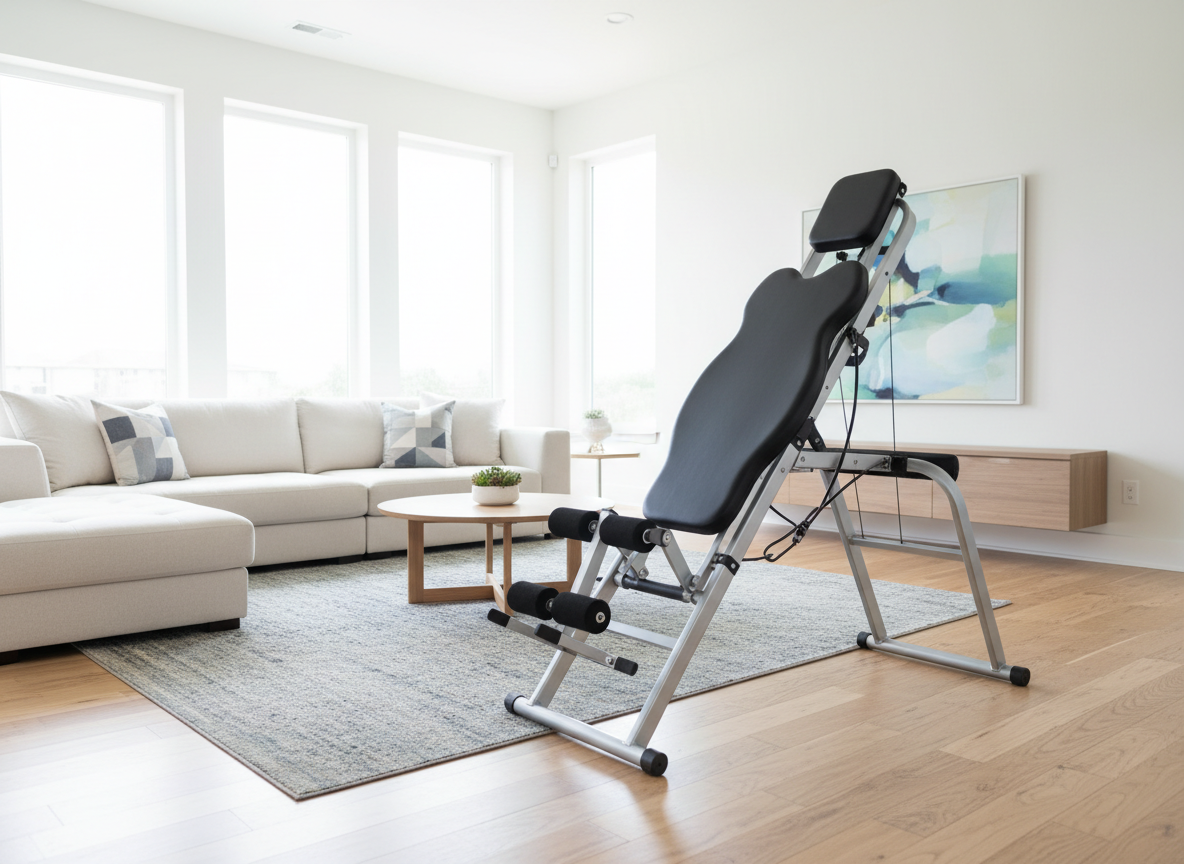
An inversion table lets you hang at an angle, partly or fully upside down, using a frame that pivots on a stand. People use them to stretch the back and relieve the feeling of pressure from sitting or standing all day. This guide explains what to check before you buy an inversion table and how to use one safely.
As an Amazon Associate, we earn from qualifying purchases. Some links on this page are affiliate links, so we may earn a commission at no extra cost to you. We have not tested these products; this guide is general information, not medical advice. Check each listing for current specs and weight limits.
Key takeaways
- Inversion is not suitable for everyone, so talk to your doctor before you start.
- Check the user height range and maximum weight against your body before you buy.
- Look for a sturdy frame, easy-to-use ankle locks, an adjustable angle limit and a safety strap or stopper.
- Start with a small angle for a short time and increase gradually.
Talk to your doctor first
Inversion is not suitable for everyone. Conditions such as high blood pressure, heart or circulatory problems, glaucoma, eye or ear conditions, pregnancy, recent injuries, and certain bone or joint problems are commonly listed as reasons to avoid it. Ask your doctor whether it is appropriate for you before you start.
What to look for in an inversion table
Height and weight capacity
Check the user height range and maximum weight in the listing. A table that does not fit your body can be unstable or uncomfortable.
Frame and stability
Look for a sturdy steel frame, a wide base and non-slip feet. Heavier-duty frames generally feel more stable.
Ankle locking system
You should be able to secure your ankles easily and firmly. Read reviews on how simple the clamps are to use while seated.
Adjustable angle and safety strap
Good tables let you set a limit on how far you rotate, so you can start with a slight tilt. A safety strap or stopper that prevents over-rotation is an important feature.
Comfort and extras
Padded backrests and handles help, and some models add heat or massage. These are optional, so weigh them against price.
How to use an inversion table safely
- Start with a small angle for a short time and increase gradually over days or weeks.
- Get in and out slowly, ideally with someone nearby the first few times.
- Set up on a flat, level surface and check all pins and locks before each use.
- Come down immediately if you feel dizzy, have a headache, or notice pain.
Inversion tables to look at
Want a closer comparison? Read our Teeter FitSpine X3 and DEX II comparison.
Frequently asked questions
Will an inversion table cure back pain?
It is not a cure. Some people find it relaxing, but persistent or severe pain should be checked by a healthcare professional.
How long should a session last?
Beginners usually start with very short sessions. Follow the manufacturer’s instructions and your doctor’s advice.
Is it hard to store?
Many fold flat. Check the folded dimensions in the listing against the space you have.
Who should not use an inversion table?
Conditions commonly listed as reasons to avoid inversion include high blood pressure, heart or circulatory problems, glaucoma, pregnancy and recent injuries. Ask your doctor.
Do I have to go fully upside down?
No. Most tables let you set a partial angle, and beginners usually start with a slight tilt.
Related health guides
- Best inversion tables: Teeter FitSpine X3 and DEX II compared
- How to choose a massage gun: features, safety and picks
More in our health guides.
Related guides
Already decided to buy and want a head-to-head? See our comparison of the Teeter FitSpine X3 and Teeter DEX II inversion tables. Not sure where to start? Check with your doctor first, since inversion is not suitable for everyone.