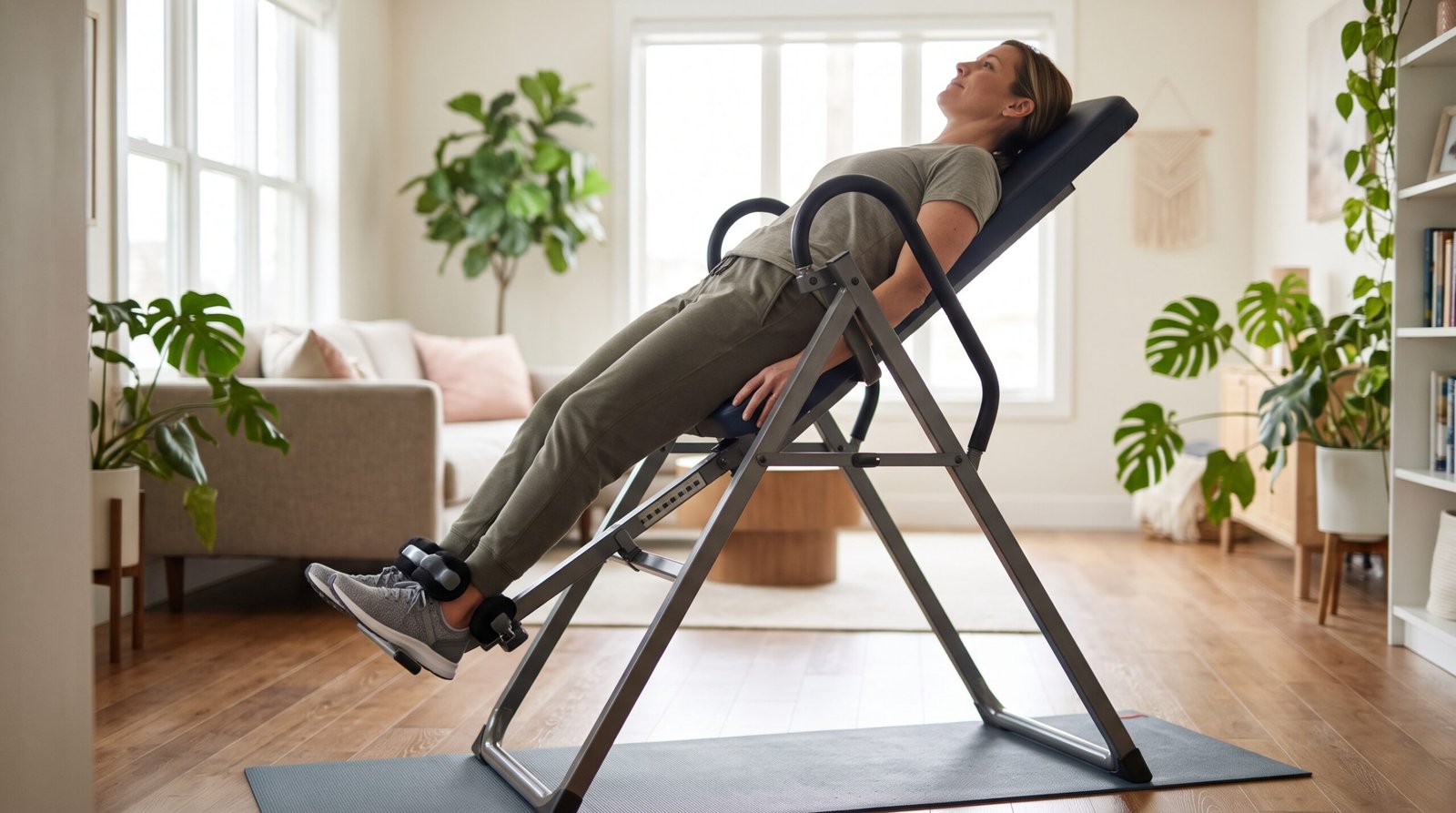
Inversion tables let you hang at an angle, partly or fully upside down, to stretch your back and decompress after a long day of sitting or standing. Teeter is one of the best-known brands, and two of its models come up often when people shop: the FitSpine X3 inversion table and the DEX II decompression and core training bench. This guide compares the two, explains what to check before buying and covers important safety points.
As an Amazon Associate, we earn from qualifying purchases. Some links on this page are affiliate links, so we may earn a commission at no extra cost to you. We have not tested these products; the details below come from the product listings. This guide is general information, not medical advice. Check each listing for current specifications, accessories and customer reviews.
Talk to your doctor first
Inversion is not suitable for everyone. Conditions such as high blood pressure, heart or circulation problems, glaucoma or other eye conditions, pregnancy, recent injuries and certain bone or joint problems are commonly listed as reasons to avoid it. Ask your doctor whether inversion is appropriate for you before you buy or use one. Our general guide to choosing an inversion table covers the basics in more depth.
What to look for in an inversion table
- Weight and height capacity: check the maximum user weight and height range in the listing, and make sure you fall well within them.
- Ankle locking system: you should be able to secure your ankles easily and firmly while seated.
- Adjustable angle and safety features: look for a way to limit how far you rotate so you can start with a slight tilt.
- Frame and stability: a sturdy frame, wide base and non-slip feet matter.
- Comfort: padded backrests, handles and a smooth pivot make a difference.
- Certifications: check what safety and regulatory claims the listing makes, and verify them from the manufacturer if they matter to you.
- Storage: check folded dimensions against the space you have.
Teeter FitSpine X3 Inversion Table
The listing describes the FitSpine X3 as an inversion table that comes with accessories and a deluxe easy-reach ankle lock. It lists a 300 lb capacity, states that it is FDA registered and UL safety certified, and says it was designed and patented in the USA. The easy-reach ankle lock is meant to make it simpler to secure your ankles, which is useful if you are using the table on your own.
Who might like it
- People who want a dedicated inversion table with a focus on ease of use.
- Anyone who wants a table that comes with accessories, as described in the listing.
- Shoppers within the stated weight and height limits.
Check before buying
- The accessories included and whether you need them.
- The user height range in the listing.
- The assembly requirements and the space you need to use it.
Teeter DEX II Inversion and Core Training Bench
The DEX II is a different kind of product. The listing describes it as an inversion and core training machine, a decompression Roman chair and hyperextension bench for abs, back and core strength. It is described as commercial-grade and rated for 350 lb, and as home exercise equipment. Rather than a traditional full-inversion table, it combines decompression with exercise.
Who might like it
- People who want to combine stretching with core and back exercises.
- Home gym owners looking for versatile equipment.
- Shoppers who need a higher listed weight rating.
Check before buying
- The footprint and whether you have space for it in your home gym.
- How its use differs from a standard inversion table, since the movements are not the same.
- Whether your fitness level and doctor’s advice suit exercises like hyperextensions.
Quick comparison
| Feature | Teeter FitSpine X3 | Teeter DEX II |
|---|---|---|
| Type | Inversion table | Inversion and core training bench |
| Listed capacity | 300 lb | 350 lb rated |
| Highlights from the listing | Accessories, deluxe easy-reach ankle lock, UL certified, FDA registered | Decompression Roman chair, hyperextension bench, commercial-grade |
| Best for | Dedicated inversion use | Combined decompression and core exercise |
Which one should you choose?
- If you want classic inversion: the FitSpine X3 is the more traditional choice.
- If you want to exercise as well: the DEX II adds core and back training.
- If weight capacity matters: compare the listed limits against your weight, with room to spare.
Want to browse more options?
Using an inversion table safely
- Start with a small angle for a short time, and increase gradually over days or weeks.
- Get on and off slowly, ideally with someone nearby the first few times.
- Set up on a flat, level surface and check all pins, locks and straps before each use.
- Return upright right away if you feel dizzy, get a headache or notice pain.
- Follow the manufacturer’s instructions and weight limits exactly.
Before you buy
- Check with your doctor.
- Measure the space where you will use and store it.
- Confirm your height and weight are within the listed range.
- Read recent reviews for assembly, stability and comfort.
- Check the warranty and return policy.
Frequently asked questions
Will an inversion table cure back pain?
No product can promise that. Some people find inversion relaxing, but persistent or severe pain should be checked by a healthcare professional.
Is the DEX II an inversion table?
The listing describes it as an inversion and core training machine, but it works differently from a traditional full-inversion table. Check the listing for details.
How long should I stay inverted?
Beginners usually start with very short sessions. Follow the manufacturer’s guidance and your doctor’s advice.
Can anyone use one?
No. Several health conditions are reasons to avoid inversion, so get medical advice first.
Are Teeter tables easy to store?
Many fold for storage, but check the folded dimensions in each listing.
Looking for more wellness picks? See our other health guides.